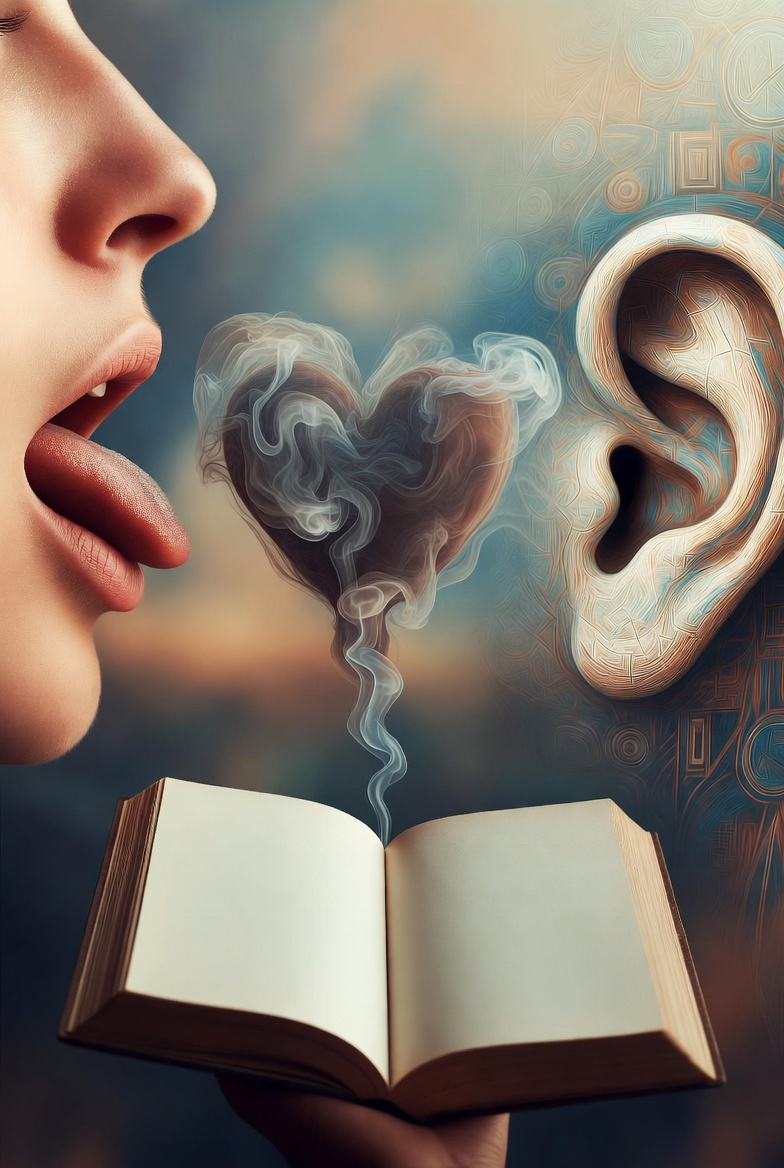
The Art of Communication: How Speaking, Listening, and Feeling Shape Every Journey
If travel teaches us one thing, it’s that communication goes far beyond words. It’s the smile you exchange with a stranger, the tone in your voice when asking for directions in a language you barely know, or even the silent moment of awe when a sunset says everything.
Whether you’re leading a meeting from a co-working space in Bansko Bulgaria or journaling at an historical park in the Scottish Highlands, communication touches every layer of the human adventure — our business world, our self-talk, our spirituality, and especially the natural world around us.
Just on a personal note; my personal commitment for this coming year is all about “communication” for me, hence this blog. As I go through something I like to share it with you. I want to enhance my communication and how I affect the world around me. So lets start with the basics of how the words that shape our world.
The Words That Shape Our Inner Journey
Let’s start with the one conversation you can never escape: the one inside your head.
Your self-talk — those passing thoughts and inner pep talks — can make or break your motivation, confidence, and overall mindset. Many travellers discover this while navigating unfamiliar cultures or unexpected setbacks. Words like “try,” “should,” or “can’t” carry hesitation and doubt. But when we reframe them — swapping “I’ll try to find my way” for “I’m finding my way” — our reality begins to shift.
The subconscious listens closely. Every word sends a signal about what’s possible. Speak to yourself like you would a close friend: encouragingly, curiously, compassionately. It’s the foundation for self-confidence and spiritual connection wherever your travels take you.

Digital Communication: Staying Human in a Tech-Driven World
Online communication has become every traveller’s lifeline. We share stories, manage remote work, and build friendships across continents — all through screens. But as technology evolves, so does human behaviour.
In the next five years, communication will leap again. We’ll see AI companions and humanoid assistants designed to empathetically engage, anticipate our emotional tone, and even help us navigate language barriers. That sounds incredible — and a bit surreal.
The key will be keeping our digital communication authentic. Use emojis, voice notes, and videos to bring warmth into virtual spaces. Remember that a genuine connection always outshines a perfectly curated caption. AI can enhance, but never replace, the heart-to-heart moments that make communication meaningful.
Business Communication on the Road: Connection Fuels Collaboration
If you’ve ever pitched from a hammock or joined a team call from a café in a coastal island of Croatia, you already know — communication is the glue that keeps remote work flowing smoothly.
The strongest teams communicate with transparency and trust. Clarity, empathy, and mindful listening can turn any project (or travel collaboration) into a shared adventure. When everyone feels heard, innovation naturally follows.
For digital nomads and travelling entrepreneurs, that means taking an extra moment to re-read messages, use voice chat to clarify tone, and express gratitude often. It’s the small gestures that bridge big distances.

Spiritual Communication: Listening to Life Itself
There’s a language that doesn’t need words — and travel invites us to hear it. It’s in meditation at sunrise, the silence of a mountain trail, or the feeling of “rightness” when you follow your intuition.
Spiritual communication isn’t about dogma; it’s about connection — to your inner voice, to others, and to the energy around you. Whether you pray, journal, meditate, or simply breathe deeply in nature, you’re in dialogue with something greater. It’s how we align ourselves with purpose and gratitude — no Wi-Fi required.
Nature’s Conversation: The Oldest Language on Earth
Even when the world seems silent, everything is communicating. Trees share nutrients through underground networks. Birds send signals through their songs. Energy moves invisibly across landscapes, tuning ecosystems into balance.
When travellers immerse themselves in nature — hiking, diving, or just sitting still — we start to feel that vibration. We become part of the dialogue instead of observers. The world is talking; we just need to slow down and listen.
The Power of Non-Verbal and Energetic Communication
Sometimes, the most powerful conversations happen without words. Eye contact, posture, instinct — they reveal volumes. Travelling sharpens these senses because you often rely on gestures, emotion, and instinct to connect.
Paying attention to the energy exchange between people (and places) can guide your choices — which city feels right, which people feel aligned, which opportunities light you up. It’s the traveller’s intuition, and like any language, it improves with practice.
The Future of Communication: Blending Humanity and Technology
By 2030, we’ll interact as much with AI as with humans. Smart devices and humanoids will help translate, entertain, and even sense emotion. But here’s the adventure: ensuring that as communication speeds up, our awareness keeps pace.
Humanity’s next era of communication isn’t about more data — it’s about deeper presence. Whether we’re talking to an AI assistant or a new friend halfway around the world, consciousness is what keeps communication soulful.
So keep connecting — with yourself, with others, with the world. Your words, your energy, your awareness — they’re the compass that guides your journey.
Lovingly created by Linda A McCall with the help of Perplexity Ai, pictures created in Grok Ai


You May Also Like

What is on Your Mind Matters – 3 Mindset Hacks For The Mindless Rush

The Most Stressful Events in Life-Moving house Yikes!
